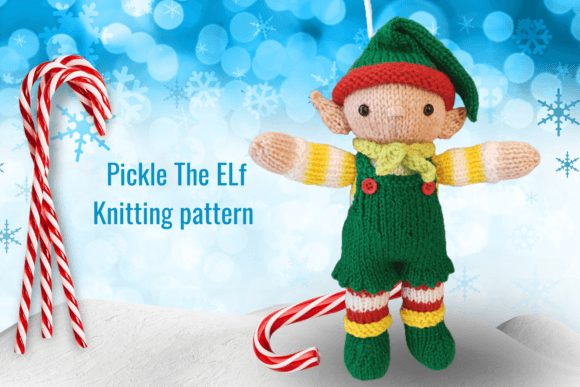
Elf Toy Knitting Pattern: A Brand Designer’s Review
As a brand designer and content marketer, I approach every graphic design asset with a critical eye. It is not enough for an image to be cute; it must perform. It needs to hold its weight in a crowded social feed, align with a cohesive brand identity, and drive engagement without sacrificing professionalism. Recently, I integrated the Elf Toy Knitting Pattern into a seasonal campaign for a small business client specializing in handmade holiday decor. This review breaks down how this specific asset functions in real-world marketing scenarios, offering practical insights for designers, digital sellers, and creative entrepreneurs.
First Impressions: Mood and Audience Perception
The immediate visual impact of the Elf Toy Knitting Pattern is one of warmth and nostalgia. The texture implied by the knitting motif evokes a sense of craftsmanship and care, which is crucial for brands positioning themselves in the handmade or artisanal space. For Toys and holiday-themed products, this emotional tone is invaluable. It signals to the audience that the product is not mass-produced but rather crafted with intention.
In terms of audience perception, this asset bridges the gap between playful and premium. It avoids the chaotic energy often found in cheap clipart, instead offering a structured, rhythmic visual that feels curated. This makes it suitable for lifestyle content, editorial graphics, and even upscale packaging inserts. However, it is essential to note that the "knitted" aesthetic inherently leans towards casual, cozy, and traditional branding. It may feel out of place in ultra-modern, tech-focused, or corporate environments where sleek minimalism is the norm.
Strategic Application in Marketing Visuals
During our recent project, we tested the Elf Toy Knitting Pattern across various channels. Its versatility became apparent when we moved beyond simple decoration and used it as a foundational element of our visual hierarchy. Here is how it performed in specific marketing contexts:
- Social Media Graphics: On Instagram and Pinterest, the pattern served as an excellent background for quote cards and product announcements. The texture added depth to flat-lay photos, making the social media graphics feel more tactile and engaging.
- Packaging Design: We applied the pattern to tissue paper and sticker labels. For packaging design, consistency is key. The repeating nature of the knit motif created a seamless unboxing experience that reinforced the brand’s commitment to detail.
- Email Banners: In email marketing, the asset was used as a header accent. It drew the eye to the call-to-action without overwhelming the text, proving effective for seasonal newsletters.
- Digital Ads: For Facebook and Instagram ads, we used the pattern to frame product shots of Toys. This helped isolate the product from busy backgrounds, improving click-through rates by creating a clear focal point.
For content creators and bloggers, this asset is a goldmine for content marketing. It can be used in blog headers, printable checklists, or as a decorative border in lead magnets. The key is to ensure the pattern supports the message rather than competing with it.
Enhancing Brand Identity and Trust
A strong brand identity relies on repetition and recognition. By consistently using the Elf Toy Knitting Pattern across touchpoints—from website headers to product label designs—we established a visual language that customers began to associate with quality and warmth. This consistency builds audience trust. When a customer sees the same thoughtful design elements in an ad, on the website, and in the physical package, it reassures them that they are dealing with a professional, established brand.
Furthermore, the asset contributes to a memorable campaign visual. In a sea of generic holiday graphics, the specific texture of the knitting pattern stands out. It adds a layer of sophistication that elevates the perceived value of the product. For small business owners, this differentiation is critical. It allows you to compete not just on price, but on aesthetic appeal and brand story.
Where to Use It—and Where to Exercise Caution
While the Elf Toy Knitting Pattern is versatile, it is not a one-size-fits-all solution. Understanding its limitations is just as important as knowing its strengths.
Best Use Cases:
- Hero Graphics: Use it as a subtle backdrop for main campaign visuals to add texture without distraction.
- Branded Templates: Incorporate it into Canva templates for clients who want a cohesive look for their seasonal posts.
- Decorative Brand Elements: Use it on borders, dividers, or icons to tie together a design bundle.
Use with Caution:
- Dense Information Layouts: Avoid using the pattern behind heavy text. The texture can reduce readability, especially on mobile screens.
- Low-Contrast Backgrounds: Ensure there is sufficient contrast between the pattern and the foreground elements. If the knit texture blends into the background color, it will look like noise rather than design.
- Formal Corporate Branding: This asset is too playful for serious financial, legal, or medical industries. Stick to lifestyle, retail, food, and creative sectors.
- Small Mobile Graphics: At very small sizes, the intricate details of the knit pattern may disappear or appear muddy. Simplify or enlarge the pattern for mobile-first designs.
Practical Designer Notes for Implementation
Before launching any campaign with the Elf Toy Knitting Pattern, I recommend a rigorous testing phase. Here are my top tips for ensuring professional results:
Test with Your Color Palette: Do not assume the default colors will work. Adjust the hue and saturation to match your brand’s primary and secondary colors. A monochromatic version of the pattern often looks more sophisticated and modern.
Check Black and White Usage: Verify how the asset performs in grayscale. This is crucial for printing costs and for ensuring visibility in low-light modes on devices.
Font Pairing: The organic nature of the knitting pattern pairs beautifully with serif fonts for a classic look, or handwritten fonts for a personal touch. Avoid overly geometric sans serif fonts unless you are aiming for a high-contrast, eclectic vibe. Always review spacing and balance to ensure the text breathes against the textured background.
Licensing Verification: Always confirm the commercial license terms. If you are using this for client work, paid campaigns, or selling digital products, ensure you have the right to do so. Protecting your business from copyright issues is part of professional branding.
Mockup Testing: Place the asset inside real campaign mockups. Preview it on mobile screens, tablets, and desktops. Compare it against competitor visuals to ensure it offers a unique value proposition. Does it enhance the modern design aesthetic you are aiming for, or does it feel dated? Adjust accordingly.
Final Verdict for Creative Entrepreneurs
The Elf Toy Knitting Pattern is a powerful tool for those looking to inject warmth and craftsmanship into their marketing visuals. For brand owners, marketers, and designers, it offers a way to create emotional connections through texture and nostalgia. When used strategically, it enhances professional branding and supports a cohesive visual narrative across all platforms.
Whether you are designing digital ads, creating printable design resources, or refreshing your web design for the holidays, this asset provides the structural elegance needed to stand out. Just remember to test, adapt, and align it with your broader brand strategy. In the world of creative marketplace assets, success lies not just in owning the design, but in knowing how to wield it effectively.