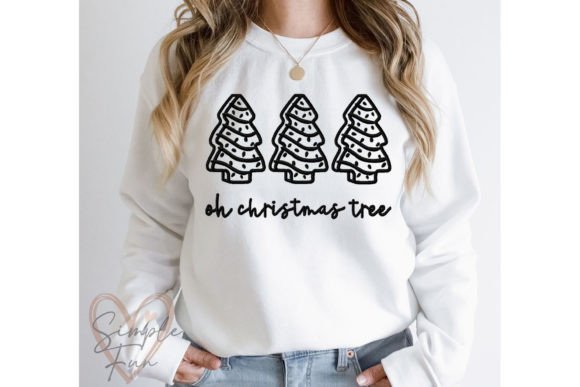
Debbie Cake Tree: A Festive Christmas Asset for Brands
As a brand designer who spends most of my week refining visual identities for local entrepreneurs, I approach every new graphic design asset with a critical eye. It is not enough for an illustration to be cute; it must serve a strategic purpose within a broader brand identity. When I first opened the files for Debbie Cake Tree, my immediate impression was one of whimsical warmth. This is not a sterile, corporate vector; it is an illustration that breathes life into a project. The style suggests a personality that is friendly, handmade, and deeply rooted in tradition, making it an ideal candidate for businesses looking to evoke nostalgia and comfort during the holiday season.
The mood created by Debbie Cake Tree is distinctly festive yet approachable. It avoids the sharp, cold edges of modern minimalism in favor of softer, more organic lines that feel inviting. For a local business owner, this translates to a brand voice that says, "We care about the details," and "We are part of your community." Whether you are running a boutique bakery, a handmade soap studio, or a specialty coffee shop, this asset fits seamlessly into narratives that prioritize human connection over mass production. It feels decorative without being overwhelming, striking a balance that is often difficult to achieve in seasonal design.
Strategic Applications for Small Business Branding
In the context of real-world application, Debbie Cake Tree offers versatility that goes beyond simple decoration. Imagine a local bakery launching a limited-edition Christmas cookie box. Using this illustration as the hero graphic on the product label instantly communicates the seasonal nature of the item while maintaining brand consistency. It works exceptionally well for packaging design where the goal is to create shelf appeal in a crowded market. The illustration can be scaled down for hang tags on artisanal candles or enlarged for window decals that invite customers inside.
Beyond physical products, this asset strengthens digital presence. For social media managers and creative entrepreneurs, Debbie Cake Tree serves as a perfect anchor for social media graphics. It can be used in Instagram stories to announce holiday hours, featured in email headers for seasonal newsletters, or incorporated into website banners to update the home page for the festivities. The key to effective small business branding is repetition with variation; using this single asset across menus, price lists, flyers, and thank-you cards creates a cohesive visual language that customers begin to recognize and trust.
Elevating Product Presentation and Customer Trust
The primary value of integrating a high-quality illustration like Debbie Cake Tree into your project is the elevation of perceived value. In the world of commercial design, presentation is everything. A generic label suggests a generic product, but a custom-feeling design implies quality and care. By utilizing this asset, a handmade business can achieve a level of polish that rivals larger competitors. It supports better product recognition, ensuring that when a customer sees that specific tree motif, they immediately think of your brand.
This visual consistency fosters stronger emotional connections. When a customer receives a package with a beautifully designed sticker featuring Debbie Cake Tree, the unboxing experience becomes memorable. This attention to detail improves customer trust and encourages repeat business. It transforms a simple transaction into a branded experience. For boutique owners and food sellers, this means the difference between a product that sits on the shelf and one that flies off it. The asset helps clarify visual hierarchy, drawing the eye to the most important elements of the packaging while adding necessary decorative flair.
Ideal Use Cases and Strategic Placement
To maximize the impact of Debbie Cake Tree, it is essential to deploy it where it shines brightest. It works best as a focal point on product labels where there is ample white space to let the illustration breathe. It is excellent for packaging accents, such as the side panel of a box or the interior lid of a gift set. As a hero graphic on promotional banners, it captures attention immediately. It also excels in printable inserts, such as recipe cards included with food products or care instructions for skincare items.
However, discernment is required. There are scenarios where this asset should be used carefully or avoided entirely. It is likely unsuitable for formal corporate branding where a stark, serious tone is required. Designers should avoid placing it on very small labels where the intricate details might get lost in print. It should not compete with ingredient-heavy layouts or legal information areas, as readability must always take precedence over decoration. Furthermore, for luxury minimalist brands that rely on typography alone, adding a whimsical illustration like Debbie Cake Tree could dilute the intended exclusive aesthetic. It is also crucial to ensure sufficient contrast; placing it on low-contrast backgrounds will render it ineffective.
Practical Notes for Professional Implementation
Before finalizing any design assets for client work or physical product sales, rigorous testing is non-negotiable. As a designer, I always test illustrations on real product mockups to see how they interact with shadows and textures. It is vital to check black and white usage to ensure the design holds up if printed on a monochrome receipt or stamp. Previewing the asset on small labels helps determine if the line weight is sufficient for high-speed printing.
Color compatibility is another critical factor. Test Debbie Cake Tree with your specific brand colors to ensure harmony rather than clash. Compare it with competitor packaging to ensure your brand stands out rather than blends in. If the file format allows, inspect the SVG or vector editability to customize line weights or colors as needed. Review PNG transparency to guarantee clean edges when overlaying the image on photos or colored backgrounds.
Typography pairing is equally important. Experiment with placing the illustration beside serif fonts for a classic look, sans serif fonts for a modern twist, or script and handwritten fonts to enhance the handmade feel. Display fonts can also work well if balanced correctly. Finally, and perhaps most importantly, always confirm the commercial license before using any asset for commercial design. Ensure you have the rights to use it for logo design, web design, and physical goods. By treating Debbie Cake Tree not just as clipart but as a strategic component of your professional branding, you can create a holiday campaign that resonates deeply with your local audience.